Why marketing attribution is more important than you think

Most marketing teams have more data than they know what to do with. Analytics platforms, CRM records, email reports, ad dashboards, webinar registrations, form submissions, payment data. Each system tells part of the story. But when someone asks the question that actually matters, "where did this customer come from, and what did it take to close them?", the answer requires someone to manually connect every island of data, often spending two to three weeks in spreadsheets performing what can only be described as marketing forensics.
Marketing attribution is the discipline that replaces those spreadsheets with a systematic, scalable answer. And in 2026, it has become one of the most strategically important investments a marketing organization can make.
30 to 40 percent of marketing budgets are wasted without proper tracking and attribution. For a company spending $1 million per year on marketing, that is $300,000 to $400,000 going to channels that are not producing proportional returns. The waste is not random. It follows predictable patterns driven by attribution models that were designed for simple, single-session e-commerce transactions, not for the complex, multi-stakeholder buying journeys that define most B2B sales today.
The problem: islands of data with no bridge between them
A typical mid-sized business uses Salesforce as its system of record for customer data, GoTo Webinar for registrations and attendance, Google Analytics for website behavior, Stripe for payment transactions, and an email marketing platform for campaign sends. Each of these systems has excellent reporting within its own boundaries. The problem is that none of them talk to each other.
What business and marketing leaders want to know is how customers transitioned through all of those systems to become a customer. The journey starts with a Google Ads click. Weeks later, the prospect attends a webinar. Later still, they return directly and submit a contact form. Finally, they click a link in an email campaign and indicate buying interest. Most CRM systems, including Salesforce, record only one of those touchpoints as the campaign source.
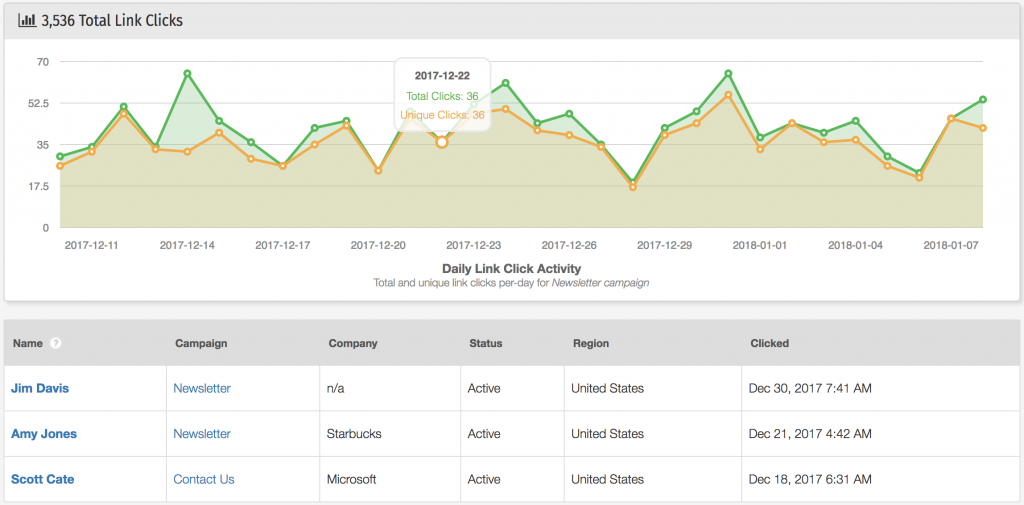
In most cases, that customer would be recorded as an organic newsletter signup, because that is the last identified touchpoint before conversion. Not only is this incorrect, it actively disincentivizes investment in the channel that originated the customer: paid search. It leads the business to believe organic inbound is its strongest acquisition channel, when in reality the Google Ads campaign that started the journey receives zero credit. Budget gets reallocated away from what works and toward what merely appears to be working.
Why the B2B buyer journey makes attribution harder
The average B2B buyer journey in 2026 spans 272 days, involves 88 touchpoints, and includes 10 stakeholders. For a deal to close, between 8 and 15 distinct touchpoints are typically required across multiple channels and multiple people within the buying organization.
This creates three attribution problems that simple analytics tools cannot solve:
- Multiple touches across long time windows. A prospect may click a paid ad in January, attend a webinar in March, receive an email sequence in April, and convert in May. An attribution window set to 30 days misses everything before the final month entirely, which is most of the journey
- Multiple stakeholders per account. In B2B, different people research, evaluate, and approve. The marketing analyst who downloads your white paper and the CFO who signs the contract may never interact with the same touchpoints. Contact-level attribution misses account-level influence entirely
- The dark funnel. 30 to 40 percent of B2B buyer touchpoints occur in untracked channels: analyst calls, peer referrals, Slack community discussions, LinkedIn DMs, review sites visited without UTM parameters. These influences are real, but they are invisible to digital attribution tools
Despite these challenges, 67 percent of B2B marketing teams still rely on last-touch attribution in 2026, crediting the final interaction before conversion and ignoring everything that preceded it. This is the attribution equivalent of crediting the cashier with the sale and ignoring the entire sales team that brought the deal to the table.
The attribution model landscape in 2026
Choosing the right attribution model is fundamentally a question of which touchpoints you believe should receive credit for a conversion. Each model answers that question differently, and each has genuine strengths and meaningful limitations. Understanding the landscape helps you choose the right model for your sales cycle and data maturity.
| Model | How credit is assigned | Best for | Key limitation |
|---|---|---|---|
| First-touch | 100% to the first interaction | Understanding demand generation and awareness | Ignores all nurturing and conversion activity |
| Last-touch | 100% to the final interaction | Simple funnels, e-commerce | Ignores everything that built the opportunity |
| Linear | Equal credit across all touchpoints | Teams that want no channel to dominate | Treats a webinar and a banner impression as equal |
| Time-decay | More credit to recent touchpoints | Promotional campaigns with short cycles | Under-credits early awareness channels in long B2B cycles |
| Position-based (U-shaped) | 40% first, 40% last, 20% across middle touches | B2B teams that value both demand gen and conversion | Middle touchpoints still receive minimal credit |
| W-shaped | 30% first touch, 30% opportunity creation, 30% closed-won, 10% distributed | B2B with defined pipeline stages and sales handoffs | More complex to implement and explain internally |
| Data-driven (algorithmic) | Machine learning assigns credit based on actual statistical contribution | Organizations with 10,000+ conversions and technical resources | Requires significant data volume; black-box for many teams |
Multi-touch attribution adoption reached 47 percent of B2B teams in 2026, up from 31 percent in 2023. The teams achieving the strongest results are running two models in parallel: multi-touch attribution for day-to-day tactical decisions, and marketing mix modeling for strategic budget allocation. Single-model attribution has become the minority approach among mature marketing organizations.
Does your CRM handle attribution?
CRM platforms like Salesforce provide some attribution capabilities, but they are not designed for multi-touch attribution. A Salesforce Opportunity can have only one Primary Campaign Source. B2B teams without a dedicated attribution layer assign either the first touch or the last touch as that primary source, and neither reflects the full journey.
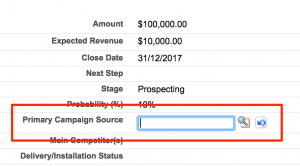
Running an attribution report inside Salesforce tells you which campaign was assigned as primary. It does not tell you how the 12 other touchpoints along the way influenced the outcome. That is the gap a dedicated attribution layer fills. It does not replace your CRM. It becomes another data source that enriches it, for example by assigning Salesforce Opportunity value back to each campaign in your marketing platform so you can measure pipeline influence across all your activities.
For practical guidance on what to measure and how to connect campaign data to business outcomes, see our article on how to evaluate your company's marketing data.
The foundation: UTM tracking and consistent naming
Attribution at any level of sophistication depends on clean, consistent data at the source. 64 percent of B2B organizations lack a formal UTM parameter policy, which means their attribution data is fragmented from the start. When one campaign manager tags a link with utm_medium=email and another uses utm_medium=Email, the analytics platform splits what should be a single data stream into two disconnected entries. Attribution built on top of inconsistent UTM data produces confident-looking reports with unreliable conclusions.
UTM codes are the foundation of campaign attribution. Every paid ad, every email link, every social post, and every SMS campaign should carry a consistent set of UTM parameters that tell your analytics platform exactly which campaign and channel drove the visit. DailyStory automatically applies UTM tracking to every campaign link, removing the manual tagging requirement and ensuring consistency across your entire marketing operation. For teams managing attribution at scale, see our guide on standardizing your UTM naming convention across every email campaign.
What a marketing attribution platform actually does
A marketing attribution platform is the bridge that connects the islands of marketing and sales data. It enables you to see and report on customer and account activity across every touchpoint, showing you what, where, and how a visitor became a lead and then a customer. Marketers can then measure campaign influence directly, including which campaigns generated pipeline and revenue by customer or account, without the manual forensics.
The practical outputs of a working attribution system include:
- Campaign influence reports showing which marketing activities touched each closed opportunity, and at what stage, so you can invest more in what accelerates deals rather than just what originates them
- Pipeline sourcing analysis identifying which channels and campaigns are generating the most qualified pipeline, not just the most leads. Conversion funnel reporting connects visitor behavior to lead quality and sales outcomes
- Attribution-based budget allocation enabling decisions about where to invest next based on actual revenue influence rather than last-touch credit. Organizations implementing multi-touch attribution see an average 19 percent improvement in marketing ROI within the first year
- Sales and marketing alignment by giving both teams visibility into the same journey data. When sales can see which marketing touchpoints warmed a lead, follow-up becomes more relevant. When marketing can see which campaigns generated closed revenue, optimization becomes evidence-based rather than intuitive
For a look at how attribution connects to the broader relationship between marketing and sales, see our guide on great digital marketing integration with sales.
The impact of AI and privacy changes on attribution
Two developments are reshaping the attribution landscape in 2026, and every marketing team needs to understand both.
Privacy changes and signal loss. Safari and Firefox have blocked third-party cookies for years. iOS App Tracking Transparency restricts mobile tracking. State-level privacy laws in the US, GDPR in Europe, and CASL in Canada all limit how behavioral data can be collected and used. 30 to 40 percent of all conversions are lost without a Conversion API on platforms like Meta, and ad blockers suppress pixel-based tracking for a meaningful share of users. The practical result is that click-based, cookie-dependent attribution is becoming less reliable, and first-party data collected through your own platform is becoming the most valuable attribution signal available.
AI-powered attribution. Machine learning attribution models can now analyze thousands of conversion paths to assign credit based on actual statistical contribution rather than fixed rules. Custom algorithmic multi-touch attribution delivers 15 to 25 percent more accurate ROI measurement than rule-based models, but requires significant conversion volume and technical resources to implement. For most mid-market teams, a well-configured position-based or W-shaped model with consistent UTM governance will outperform an AI model built on dirty data.
The teams shipping the most defensible attribution numbers in 2026 are running two models in parallel and reconciling them: multi-touch attribution for tactical, campaign-level decisions, and marketing mix modeling for strategic budget allocation. This dual-model approach is becoming the operating standard among mature marketing organizations.
Where to start: a practical attribution roadmap
Attribution implementation does not require a massive technology project. Most teams can make meaningful progress within a quarter by working through these steps in order:
- Audit your current tracking. Identify every campaign that runs without consistent UTM parameters. This is almost always the single biggest source of attribution data loss, and it costs nothing to fix. See our guide to UTM codes for a complete walkthrough.
- Establish shared definitions. Agree with your sales team on what qualifies as a Marketing Contacted Lead, a Marketing Qualified Lead, and a Sales Qualified Lead. Attribution is meaningless if marketing and sales are measuring different things. See our guide on aligning marketing and sales for how to structure this conversation.
- Choose an attribution model appropriate to your sales cycle. For B2B with sales cycles longer than 60 days, position-based or W-shaped models reflect the journey more accurately than first-touch or last-touch. Extend your lookback window to at least 90 to 180 days so early touchpoints are not erased from the model.
- Connect your CRM to your marketing platform. Attribution data has to flow between systems to be useful. When your marketing automation platform writes campaign influence data back to Salesforce Opportunities, both marketing and sales can see the full picture without anyone pulling spreadsheet reports. Marketing automation is what makes this connection systematic and real-time.
- Add qualitative attribution alongside digital tracking. Ask every new opportunity: "How did you first hear about us?" This single question captures dark funnel signals that no digital attribution tool can see: podcast episodes, word of mouth, industry events, analyst mentions. Layer this data alongside your digital attribution to get a more complete picture.
- Review and adjust quarterly. Attribution models are not set-and-forget. Review your data quarterly against your actual closed revenue, look for systematic over-investment in last-touch channels, and rebalance budget incrementally rather than making dramatic shifts based on a single reporting period.
An integrated marketing strategy and a working attribution model are complementary investments. The integrated strategy ensures your channels work together toward a common message. Attribution tells you which combination of those channels is actually driving revenue, so you can invest more precisely in what works.
DailyStory connects campaign tracking, lead capture, email and SMS automation, CRM integration, and conversion funnel reporting in one platform, giving you the attribution visibility you need to run your marketing operation on evidence rather than assumption. Schedule your free demo to see how it works.